Signed in as:
filler@godaddy.com

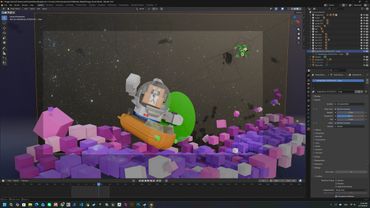
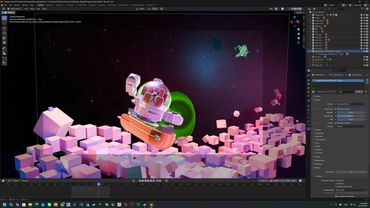
Astronaut Pup is a brave explorer from Earth, embodying courage, curiosity, and unwavering loyalty. Equipped with a gleaming helmet and a compact hover-craft, he journeys across the stars to study unknown lifeforms. He believes every planet holds a story—and even when facing Dr. Cat’s ruthless forces, he never loses his optimism or sense of wonder.
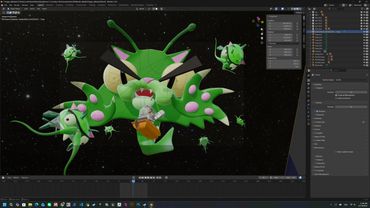
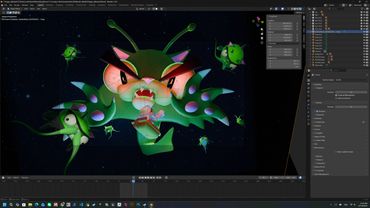
Evil Dr. Cat is the mastermind of chaotic cosmic science, blending feline instinct with advanced alien biotechnology. Armed with mechanical claws, synthetic enhancements, and an army of bio-engineered soldiers, he seeks to dominate the galaxy. Legends say he aims to redraw the boundary between life and machine, creating a new order of “perfect beings.”
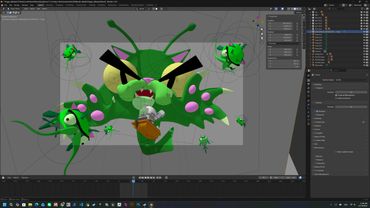
The Space Catfish are mass-produced minions engineered in Dr. Cat’s secret laboratory. Gliding through the void with a strange green glow, these hybrid creatures combine feline ears with long, sensitive whiskers that detect energy shifts. Their intelligence may be limited, but their obedience is absolute—making them the perfect cosmic cleanup crew for Dr. Cat’s schemes.

Due to the two-week production timeline, character animation was designed to be simple, clean, and efficient.
The player-controlled dog character uses minimal animation states to convey emotional feedback and responsiveness without relying on complex rendering or exaggerated motion.
This approach maintains clarity while ensuring that character behavior remains readable within a fast-moving gameplay context.
The level is structured around a linear, corridor-like path that guides player movement and enforces forward momentum.
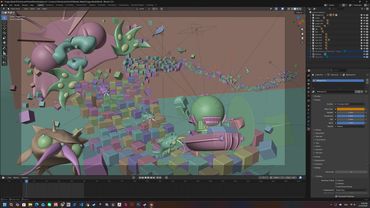
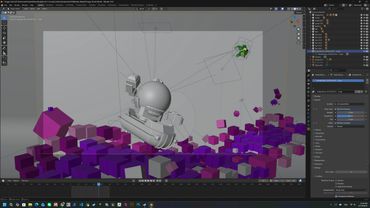
Enemy placement and obstacle density were iteratively adjusted using early graybox prototypes to test pacing, difficulty escalation, and player reaction time.
The level design emphasizes spatial awareness and timing, allowing players to anticipate threats while maintaining a consistent sense of pressure.
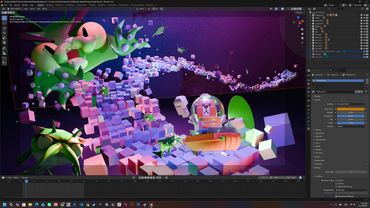
The game environment was designed with a clean, low-poly visual language to prioritize gameplay readability.
Instead of detailed scenery or complex lighting, the environment focuses on abstract geometric forms and a strong directional path, helping players quickly understand spatial depth, movement direction, and incoming threats.
This restrained visual approach ensures that environmental elements support gameplay rather than compete for attention.
The core gameplay revolves around lateral movement and precise timing.
Players dodge incoming enemies by moving left and right using a custom-built motion controller, and at the correct moment, reflect enemies back along the path to damage the final boss.
This mechanic transforms defensive actions into offensive opportunities, encouraging risk–reward decision making under pressure.
The UI was intentionally kept minimal to avoid disrupting the player’s focus on the track and enemies.
Core information such as player status and feedback is presented clearly and unobtrusively, reinforcing moment-to-moment decision making without adding visual noise.
UI elements were designed to complement the low-poly visual style and remain legible during fast-paced gameplay.
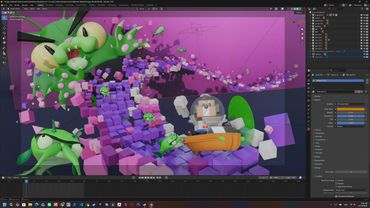
The production process followed a rapid prototyping workflow, beginning with graybox layouts and placeholder assets to validate gameplay mechanics and spatial readability.
Visual assets, animations, and effects were added incrementally after the core experience was confirmed, ensuring alignment between visual presentation and gameplay intent.
This workflow allowed the team to focus on testing player experience first, while keeping scope manageable within the limited timeframe.